

so, this is about how we pack orders at Morele, right?
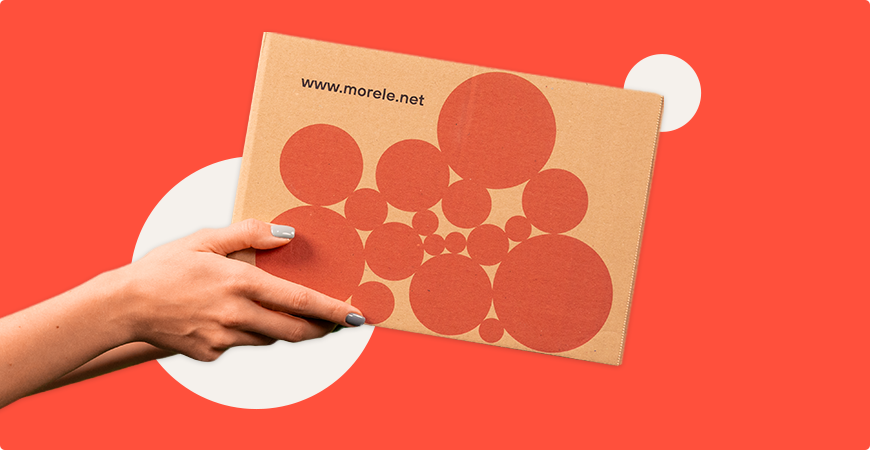
The process of packing and shipping our orders is the result of many years of experience, testing the latest possibilities, and optimizing the materials used. It has become particularly important to us in the context of preparing for the implementation of a broad ESG (Environmental, Social, and Governance) strategy.
When developing our product packing process, we placed great emphasis on optimal paper consumption throughout the entire journey—from carton production to box creation—and on minimizing waste of paper, glue, plastic, energy, and human labor.
That’s why for most of our shipments, we use boxes glued with a dedicated machine (an automated system), and thanks to this:

We significantly speed up the order shipping process, so your order can be with you within 24 hours of placement!

The box produced by the machine has a “rigid,” stable construction that allows for excellent product protection, often without the need for fillers or only a small amount.

This rigid construction allows us to use thinner cardboard, specifically 320 g/m². In comparison, boxes sealed with tape, even small ones, typically require 420 g/m², and “custom-sized” machine-made cartons often use 560 g/m². This significantly reduces the amount of raw material needed, even for larger packaging.

The adopted formats, based on FEFCO 0200 and a 0453 lid, allow for an 8% space saving compared to a typical FEFCO 0201 carton (also known as a regular slotted carton or American box).

The size of our box’s blank (seemingly unusual) and its lid match the width of the cardboard sheet from the corrugator, which also allowed us to reduce waste generated in the cardboard factory during carton production. During automated packing, we only cut the box to minimize the amount of air being shipped.

At the same time, we avoid using unnecessary plastic tape to seal it.

Boxes of the same size often simplify transport, allowing us to avoid shipping unnecessary air, especially when dealing with packages of various dimensions.

We collect cardboard from our incoming deliveries and send it for recycling. The tonnage of cardboard recycled in 2023 accounted for exactly 73% of the total amount of cardboard we introduced to the market. This year, we’re aiming even higher.

We’ve eliminated polymailers, using boxes as the primary alternative for small packages.
Fun fact
Using standard packaging significantly saves energy on lighting in areas where product-to-packaging fitting processes typically took place.
PRO TIP 1
PRO TIP 2
Our packaging is so durable that you can reuse it, for example, to store items in your basement, garage, or attic. You can even use it as an eco-friendly toy for kids or pets!